Cast Iron vs Nonstick vs Stainless Skillets
Three pan types, three different jobs. A $30 Lodge cast iron and a $25 nonstick cover 90% of home cooking. Here's what each is for and what to skip.
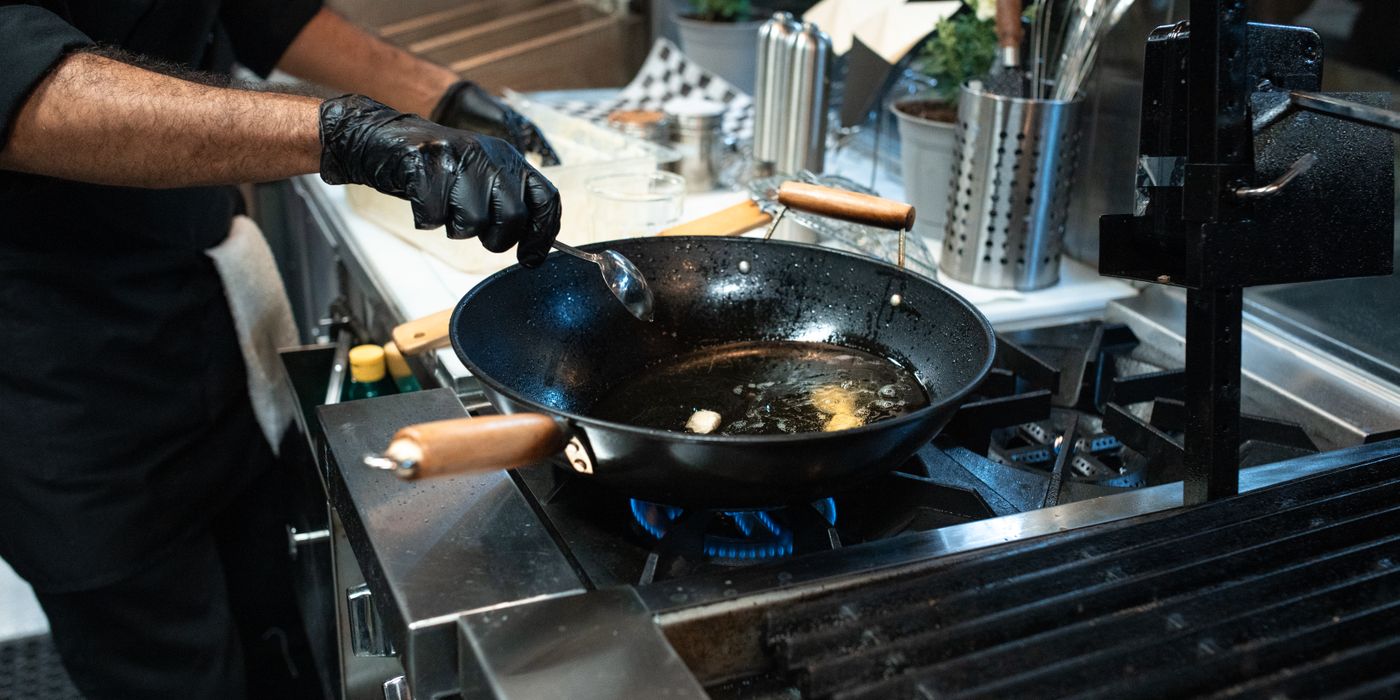
The skillet aisle is full of marketing claims and confusing materials. Hexclad says it does everything. Ceramic says it’s healthier. Enameled cast iron says it’s the premium upgrade. Most of it is unnecessary. Professional cooks use three pan types that cover every cooking situation — and two of them cost under $40.
At a glance
| Cast Iron (Lodge) | Nonstick (T-fal) | Stainless (All-Clad) | |
|---|---|---|---|
| Price | $30 | $25 | $100-130 (often on sale) |
| Best for | Searing, oven use, deep frying | Eggs, fish, pancakes, delicate proteins | Sautéing, sauces, versatile everyday cooking |
| Gets better over time | Yes — improves with seasoning | No — degrades over 2-5 years | Yes — outlasts nonstick indefinitely |
| Oven-safe temp | Any temp (no limits) | 350-400°F (coating limit) | Any temp |
| Metal utensil safe | Yes | No | Yes |
| Dishwasher safe | No (seasons it) | Sometimes | Yes |
| Weight | Heavy (5.35 lbs) | Light | Medium |
| Requires seasoning | Yes (easy to maintain) | No | No |
| Reactivity with acidic foods | Slight (tomatoes, wine) | None | None |
| Replacement cycle | Never (heirloom quality) | Every 2-5 years | Never (if maintained) |
Cast iron — the lifetime investment at $30
Lodge has made cast iron skillets in Tennessee since 1896. The 10.25” skillet costs about $30. It will outlast you. Cast iron heats evenly once hot, holds heat longer than any other pan type, and produces the best sear on steaks, chops, and chicken thighs that you can achieve on a home stove. It also goes from stovetop to oven to table without any issue.
- Seasoning is easy: Lodge skillets come pre-seasoned. With normal cooking — especially anything with fat — the seasoning builds over time. The pan you use for ten years is better than the pan you buy new. Wash with hot water, dry immediately, and rub with a thin layer of oil occasionally.
- Searing: cast iron retains heat when you add cold meat in a way that stainless and nonstick don’t. The pan doesn’t drop temperature as severely, which means you get a proper sear instead of steam. This is why every steakhouse uses cast iron or carbon steel.
- Oven use: no temperature limit (no plastic handles, no nonstick coating to burn). Cast iron is the right pan for cornbread, skillet cookies, and anything that finishes in a hot oven.
- Weakness: heavy. The 10.25” Lodge weighs 5.35 lbs — wrist fatigue is real if you’re doing multiple pans. Slow to heat up compared to stainless. Reactive with acidic foods (tomatoes, citrus, wine) — fine for brief contact but not ideal for long braises with tomato sauce.
- Carbon steel alternative: carbon steel pans (de Buyer Mineral B, ~$60) get cast iron performance at half the weight. Professional kitchens use carbon steel instead of cast iron. Requires more seasoning effort but is excellent for anyone who finds cast iron too heavy.
Nonstick — the egg and fish pan
A nonstick skillet is not a replacement for cast iron or stainless — it’s for the things those pans do poorly: eggs, fish fillets, pancakes, and any delicate protein that sticks to metal without abundant fat. Every well-stocked kitchen has one nonstick pan. No kitchen needs more than one.
- T-fal Expertise (~$25): the workhorse nonstick. Thermo-Spot heat indicator (the center turns solid red when the pan is properly preheated), durable coating, oven-safe to 400°F. Reliable for 3-5 years with normal use.
- Maintenance reality: PTFE (Teflon) nonstick coatings degrade. High heat accelerates degradation. Never use metal utensils. When the coating starts flaking (usually years in), replace the pan — don’t keep using a flaking nonstick.
- Ceramic nonstick: marketed as “healthier” (because it’s PTFE-free). The ceramic coating typically degrades faster than PTFE — most ceramic pans lose their nonstick properties in 1-2 years rather than 3-5. Not worth the premium over PTFE for most people.
- The $100+ nonstick question: All-Clad and Made In make expensive nonstick pans. They last longer and heat more evenly. If you cook eggs every day for 10 years, the premium is worth it. If you cook eggs occasionally, the T-fal is fine.
Stainless steel — the everyday workhorse
Stainless steel pans are the professional kitchen standard for everything that doesn’t require nonstick. They can take high heat, go in the dishwasher, work with metal utensils, and — crucially — they develop a fond (the brown bits stuck to the pan after searing) that dissolves into sauces and makes the whole dish more flavorful. This is why professional kitchens use stainless for almost everything.
- All-Clad D3 ($100-130 on sale): the benchmark. Three-layer construction (steel-aluminum-steel) that heats evenly edge to edge. Induction compatible. Oven-safe to any temp. A $130 All-Clad bought today will be in your kitchen in 25 years.
- The sticking question: stainless sticks if you add food before the pan is properly hot. The trick: heat on medium until a drop of water skitters across the surface (Leidenfrost effect), then add your oil. With this method, even fish doesn’t stick badly.
- Budget stainless: Made In and Tramontina both make well-regarded stainless pans for less than All-Clad. The Tramontina Professional (~$30-40) is the frequent budget recommendation from professional cooks.
What to skip
- Hexclad: expensive marketing. The hybrid nonstick/steel surface is a compromise that’s less nonstick than nonstick and less sear-capable than stainless. Gordon Ramsay endorses it — that’s the biggest red flag in cookware.
- Copper-core for home cooks: copper is the best heat conductor but requires tinning (the cooking surface wears off and needs to be re-lined). Maintenance burden not worth it for home use.
- Pan sets: most home kitchens need a 10” and 12” skillet and a saucepan. A 15-piece set fills drawers with pieces nobody uses.
Who should pick which
The takeaway
Lodge cast iron + T-fal nonstick. $55 total. Covers everything a home cook needs from a skillet. The Lodge will be in your kitchen longer than your current furniture. The T-fal will need replacing in a few years — that’s fine, it costs $25.
If you want to add a third pan: All-Clad D3 stainless 10” on sale fills the “everyday sauté” role better than either of the above. Wait for a sale — it goes on sale regularly for 20-40% off.